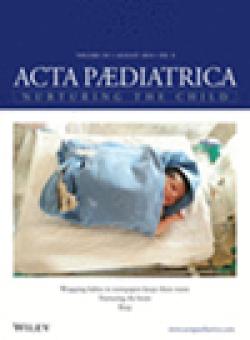
| Skin-to-skin contact the first hour after birth, underlying implications and clinical practice |
21 |
| The panorama of cerebral palsy in Sweden part XII shows that patterns changed in the birth years 2007-2010 |
14 |
| Brain connectivity in children is increased by the time they spend reading books and decreased by the length of exposure to screen-based media |
14 |
| Use of social media is associated with short sleep duration in a dose-response manner in students aged 11 to 20 years |
13 |
| Guidance on the use of probiotics in clinical practice in children with selected clinical conditions and in specific vulnerable groups |
11 |
| Gender disparities in preterm neonatal outcomes |
11 |
| Nutritional influences on brain development |
11 |
| No neurodevelopmental benefit of cerebral oximetry in the first randomised trial (SafeBoosC II) in preterm infants during the first days of life |
10 |
| Review shows that maternal obesity induces serious adverse neonatal effects and is associated with childhood obesity in their offspring |
10 |
| Stunting, starvation and refeeding: a review of forgotten 19th and early 20th century literature |
10 |
| Effect of early probiotic supplementation on childhood cognition, behaviour and mood a randomised, placebo-controlled trial |
10 |
| Phototherapy is commonly used for neonatal jaundice but greater control is needed to avoid toxicity in the most vulnerable infants |
9 |
| Antibiotics in the first week of life were associated with atopic asthma at 12 years of age |
9 |
| High blood pressure in the young: why should we care? |
9 |
| Treatment with nitric oxide in the neonatal intensive care unit is associated with increased risk of childhood cancer |
9 |
| Adult congenital heart disease: Past, present and future |
8 |
| Prospective study confirms that bronchiolitis in early infancy increases the risk of reduced lung function at 10-13 years of age |
8 |
| Probiotics promoted head growth in extremely low birthweight infants in a double-blind placebo-controlled trial |
8 |
| Traumatic shaking: The role of the triad in medical investigations of suspected traumatic shaking |
8 |
| Evidence-based clinical guidelines on analgesia and sedation in newborn infants undergoing assisted ventilation and endotracheal intubation |
7 |
| Quality predictors of parental satisfaction after birth of infants with life-limiting conditions |
7 |
| Women who had positive relationships with their own mothers reported good attachments to their first child before and after birth |
7 |
| Paediatric breath-holding spells are associated with autonomic dysfunction and iron deficiency may play a role |
7 |
| Trends in prevalence of thinness, overweight and obesity among Swedish children and adolescents between 2004 and 2015 |
7 |
| Automated pose estimation captures key aspects of General Movements at eight to 17 weeks from conventional videos |
7 |
| Hypertension in childhood obesity |
7 |
| Monitoring and interventions are needed to reduce the very high Caesarean section rates in Vietnam |
7 |
| Population-based register study of children born in Sweden from 1997 to 2014 showed an increase in rickets during infancy |
7 |
| Review concludes that specific recommendations are needed to harmonise the provision of fresh mother's milk to their preterm infants |
7 |
| Review demonstrates that less invasive surfactant administration in preterm neonates leads to fewer complications |
7 |
| One-third of school-aged children with cerebral palsy have neuropsychiatric impairments in a population-based study |
6 |
| A meta-analysis of neurodevelopmental outcomes at 4-10 years in children born at 22-25 weeks gestation |
6 |
| Exposure to human voices has beneficial effects on preterm infants in the neonatal intensive care unit |
6 |
| The Internet Game Use-Elicited Symptom Screen proved to be a valid tool for adolescents aged 10-19 years |
6 |
| Physical activity preferences of 10-year-old children and identified activities with positive and negative associations to cardiorespiratory fitness |
6 |
| Self-efficacy did not predict the outcome of the transition to adult care in adolescents with inflammatory bowel disease |
6 |
| Antimicrobial stewardship in the neonatal unit reduces antibiotic exposure |
6 |
| What does the world think of ankyloglossia? |
6 |
| The inheritance of cardiovascular disease risk |
6 |
| Association between vitamin D, antimicrobial peptides and urinary tract infection in infants and young children |
6 |
| Japanese scoring systems to predict resistance to intravenous immunoglobulin in Kawasaki disease were unreliable for Caucasian Israeli children |
6 |
| Intestinal failure: the evolving demographic and patient outcomes on home parenteral nutrition |
6 |
| Review shows that parental reassurance and nutritional advice help to optimise the management of functional gastrointestinal disorders in infants |
6 |
| Does the Helping Babies Breathe Programme impact on neonatal resuscitation care practices? Results from systematic review and meta-analysis |
6 |
| Screening for coeliac disease in children |
6 |
| Review shows that donor milk does not promote the growth and development of preterm infants as well as maternal milk |
6 |
| The Welch Emotional Connection Screen: validation of a brief mother-infant relational health screen |
6 |
| Limited association between markers of stress during pregnancy and fetal growth in 'Born into Life', a new prospective birth cohort |
6 |
| Digital stethoscopes in paediatric medicine |
5 |
| Severe obesity is a limitation for the use of body mass index standard deviation scores in children and adolescents |
5 |